
The Pharisee, the Tax Collector, and Our Continuing Need for Grace
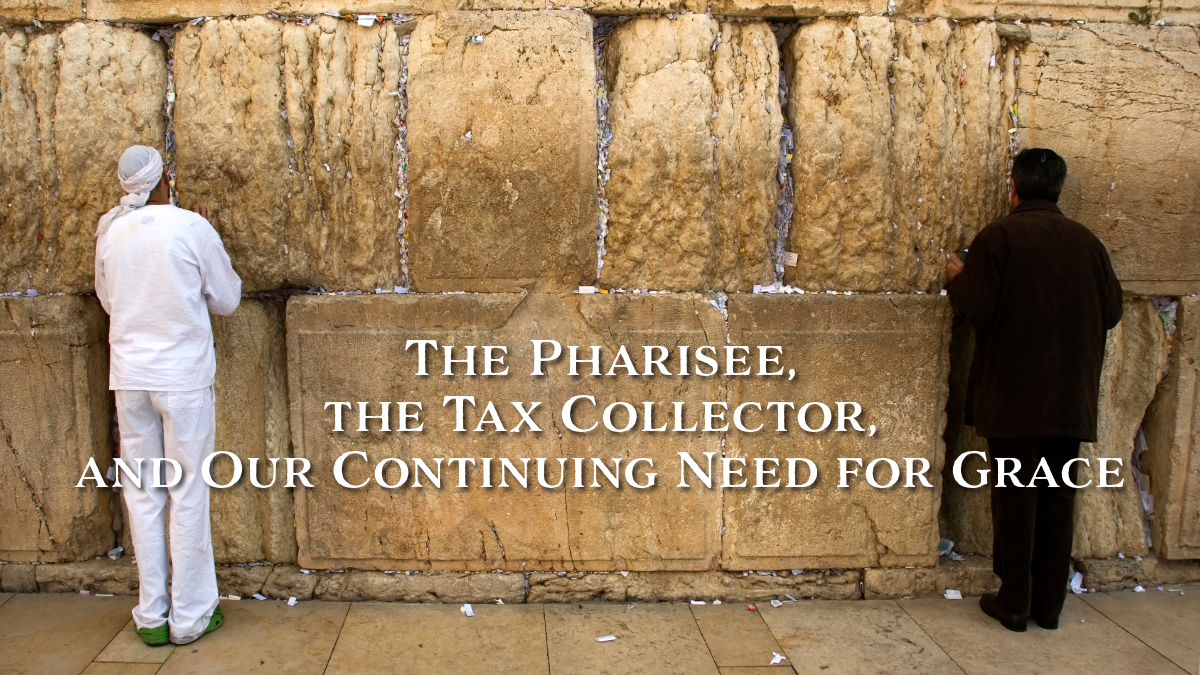
In Luke 18:9–14, Yeshua tells a parable that cuts to the heart of human pride and divine mercy. Two men enter the Temple to pray. One a Pharisee, confident in his religious devotion. The other a tax collector, despised by society, yet painfully aware of his sin. Their prayers reveal two radically different postures before God.
The Pharisee stands tall, rehearsing and taking inventory of his righteousness: fasting twice a week, tithing meticulously, avoiding the sins of others. His words are less a prayer than a self-congratulatory speech. He does not ask God for mercy or help, because in his mind, he has already proven righteousness.
The tax collector, by contrast, cannot lift his eyes to heaven. He beats his chest and cries out, “God, be merciful to me, a sinner.” His prayer is raw, stripped of pretense, and rooted in desperation. He knows that he cannot stand before God on his own merit. His only hope is mercy.
Yeshua’s conclusion is startling: “I tell you, this man went down to his house justified rather than the other. For everyone who exalts himself will be humbled, but the one who humbles himself will be exalted.”
This parable reminds us that grace is not a one-time gift, but a continual necessity. We never outgrow our dependence on Messiah’s righteousness. The Pharisee’s error was not his devotion, fasting and tithing are commendable disciplines, but his misplaced trust. He relied on his own works rather than God’s mercy. The tax collector, though guilty of much, placed his hope in the only place it could truly rest: the compassion of God.
Paul’s confession in 1 Timothy 1:15 echoes this truth: “Messiah Yeshua came into the world to save sinners, of whom I am the worst.” Paul does not mean that his sins were objectively greater than all others. Rather, he recognizes that the deepest rebellion he knows is his own. Each of us, if honest, must say the same. The worst sinner we know is ourselves, because we are most acquainted with the pride, selfishness, and hidden motives of our own hearts.
This perspective guards us against the Pharisee’s trap of comparison. It is easy to look at others and feel superior, measuring our righteousness against theirs. But the gospel calls us to confession, not comparison. When we acknowledge our own need for mercy, we find ourselves standing alongside the tax collector, crying out for grace.
And here is the good news: God answers that cry. In Messiah, we are justified, not by works, not by fasting or tithing, not by moral superiority, but by His righteousness imputed to us. Grace is not a supplement to our efforts; it is the foundation of our salvation.
This truth has practical applications for daily life:
1. Confession over comparison: We are not called to measure ourselves against others, but to stand honestly before God.
2. Grace over self-righteousness: Our spiritual disciplines are good, but they will never justify us. Only Messiah’s righteousness covers us.
3. Humility over pride: The way up in the Kingdom is always down: bowing low, acknowledging our need, and trusting His mercy.
The parable of the Pharisee and the tax collector is not simply a story about two men long ago. It is a mirror held up to each of us. Will we stand tall, listing our accomplishments, or will we bow low, confessing our need? The Pharisee trusted in himself and left the Temple unjustified. The tax collector trusted in God’s mercy and left forgiven. The wretch of society became the example in this parable.
As disciples of Yeshua, we must continually return to the posture of the tax collector for daily help to live into our new identity in Christ. Our prayer must echo his: “God, be merciful to me, a sinner.” This is not a prayer of despair, but of hope, because God delights to show mercy. His grace is sufficient, His righteousness complete, and His love unfailing. We have received this in full, in Christ.
In the end, the parable reminds us that humility is the doorway to exaltation. To confess our sin is not to wallow in shame, but to open ourselves to the transforming mercy of God. And as Paul reminds us, Messiah came into the world precisely for this purpose: to save sinners, even the worst we know—ourselves.
Maranatha. Shalom.
Bp. Justin
