
Fear Not Little Flock
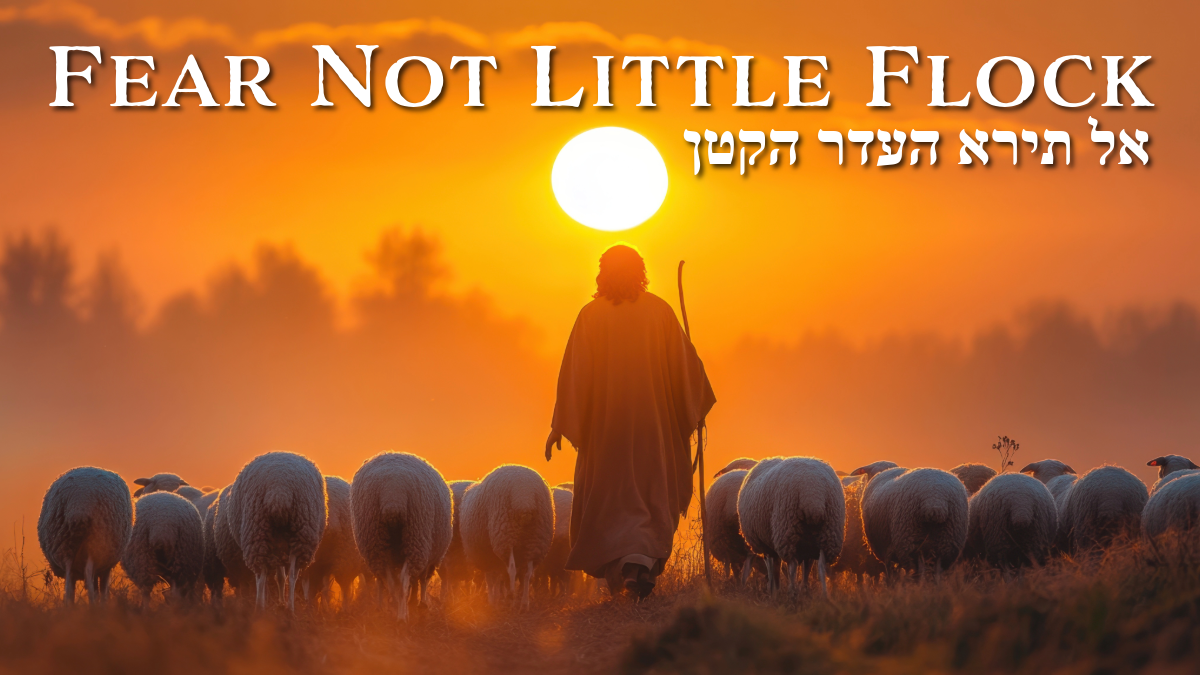
“Fear not, little flock, for it is your Father’s good pleasure to give you the kingdom” (Lk. 12:32). אל תירא העדר הקטן
Nearly two months ago, the Lord expanded and extended the work my vocation. While I continue to keep watch over a local flock, He has given me watch over an extended flock. When I considered the details of this new assignment, it was not the administrative tasks that concerned me, actually I’m probably one of only a few people who actually enjoy admin tasks, but providing adequate pastoral care to other shepherds in the field, and by doing so, their flocks and ministries as well.
During this time Luke 12:32 has been on my heart as I continue the work of ministry, specifically the first clause: “Fear not, little flock …” (אל תירא העדר הקטן). This independent clause functions as a command: “Do not fear.” Who should not fear? His flock. Why? The Lord’s flock will receive “the kingdom.” But until then, they will be cared for-by whom? Those assigned as under-shepherds in the harvest fields of the Lord Yeshua/Messiah. The primary task of the under-shepherd is stewardship, not personal kingdom building. The flock will not fear when the Shepherd, and the shepherds in the field stand watch.
While not a Roman Catholic, I have found this saying of Gregory the Great to be quite meaningful as he understood his position: "Servant of the servants of God." This is an attitude to which every under-shepherd should aspire. Recall the words and example of Messiah: “But whoever would be great among you must be your servant, and whoever would be first among you must be your slave, even as the Son of Man came not to be served but to serve, and to give his life as a ransom for many” (Matt. 20:26-28).
In the tender words of Luke 12:32, Yeshua/Jesus addresses us, His disciples, as a “little flock.” The imagery is intimate: fragile sheep, easily frightened, who are precious to the Shepherd. The command “Fear not” is not rooted in human strength, but in the Father’s delight to give His people the kingdom. This is caught up in His love for us. The Father pledges His care, provision, and inheritance to His little flock.
An under-shepherd, serving under the authority of the Good Shepherd, is entrusted with this flock. His role is not ownership, but stewardship; not domination, but devotion. The flock belongs to God, and the shepherd’s task is to reflect the heart of Messiah in care, protection, and guidance.
What then should we do?
Love the flock sacrificially: “I am the good shepherd. The good shepherd lays down his life for the sheep” (Jn. 10:11). The under-shepherd’s love must mirror Christ’s willingness to give of himself for the well-being of the people.
Feed the flock faithfully: “Feed my lambs…Tend my sheep…Feed my sheep” (Jn. 21:15–17). The ministry of teaching, catechesis, and discipleship is not optional, it is the very nourishment of the flock.
Guard the flock vigilantly: “Pay careful attention to yourselves and to all the flock, in which the Holy Spirit has made you overseers, to care for the church of God, which he obtained with his own blood” (Acts 20:28). The shepherd must be watchful against wolves, false teaching, division, and sin that threaten the flock’s unity and safety.
Lead the flock humbly: “Shepherd the flock of God that is among you, exercising oversight, not under compulsion, but willingly, as God would have you; not for shameful gain, but eagerly; not domineering over those in your charge, but being examples to the flock” (1 Pet. 5:2–3). Leadership in God’s kingdom is marked by humility, service, and example, not coercion.
Yet, the under-shepherd’s devotion is sustained by hope: “And when the chief Shepherd appears, you will receive the unfading crown of glory” (1 Pet. 5:4). This promise reminds every servant-leader that their labor is not in vain. The flock may be small, fragile, or scattered, but it is beloved. The Father delights to give them the kingdom, and the Shepherd delights to reward those who care for His sheep.
This is the heart of the call. To serve the flock of God faithfully, humbly, diligently, always remembering that they belong to the One Who purchased them with His own blood: Yeshua/Jesus.
Administrative tasks are important, but the care of the souls entrusted to you, is of inestimable importance. This is why my daily prayer is: “Help me, Lord, to care for Your people.
Lord, strengthen every pastor to love Your flock as You love them. Teach us to feed, guard, and guide with humility and devotion, remembering that it is Your good pleasure to give us the kingdom. May we never despise the “little flock,” but cherish them as Your inheritance, purchased by the blood of Christ, Who is ever with us. Amen.
Maranatha. Shalom.
Bp. Justin D. Elwell
