
Shabbat Chol HaMoed Pesach (Shabbat during the intermediate days of Passover) Exodus 33:12-34:26
Weekly Torah Studies for 2025/26 ( 5786).
On the road to Emmaus, Yeshua met with two of His disciples and, beginning at Moses and all the Prophets, He expounded to them in all the Scriptures the things concerning Himself. (Luke 24:27). For our Torah studies this year, therefore, week by week we will seek to discover how all of Torah prepared the way for the coming Messiah.
4th April 2026 (17 Nisan)
Shabbat Chol HaMoed Pesach (Shabbat during the intermediate days of Passover) Exodus 33:12-34:26
For those reading this on the first Sabbath after Pesach (Passover), the moon is beginning to wane, but is still almost full and still bright, lighting up the sky on a beautiful spring evening. We must keep in mind all that God’s people celebrated over the last few days, especially the evening of Pesach when, as a families, each gathered around the table to review the history of their people when they first came out of Egypt.
A few days ago the moon was full and we could stop and think that this was the very same moon that shone on the very same date over the Land of Egypt, bringing light to the path of all Israel in their great multitude, beginning on their pilgrim journey to the Promised Land.
God declared that Nisan was the first of the months of the year, and how appropriate that is. In the Land of Israel and in other nations of the northern hemisphere, Spring is waking up. The birds are singing and making preparations for their nests in the trees to build their new family. The buds are breaking and the warming sun brings forth beautiful new leaves, followed by a wonderous assortment of colourful blossoms, each with their special aroma. It is the season of new life from the comparative death of winter. Each year the cycle is renewed to help us with the memory of what God has done to deliver us from death to life, be it in comparison with the darkness of the Angel of Death moving across all Egypt, or every aspect of new life that is our present experience from here to eternity, through faith and obedience to the God of Abraham, Isaac and Jacob.
Year by year from when Israel settled in their Promised Land, as the moon approached its fulness on the days leading up to 14 Nisan, here and there throughout the Land, a stirring began as the homes prepared for Pesach. Those who should, were moved to begin their pilgrim walk to Jerusalem in accordance with God’s commandment that three times each year, the men were to appear before Him (Exodus 34:23). Often, this became a family pilgrimage to the Temple in Jerusalem. The families from the towns and villages, growing into a moving crowd, were like streams of water, merged into one great company. Fathers would tell their children of earlier days, perhaps when they made their first journey with their own father. They might compare their own pilgrim journey with that of Israel in the wilderness, camped around the Tabernacle or journeying to the next encampment. They might sing the songs of Zion as they enjoyed the beauty of an early Spring day together when, as on any Sabbath, work had ceased so that the glory of Creation could be experienced and the expectation of being in God’s presence increased.
God’s people are a pilgrim people, but let’s consider what this word pilgrim should not mean to us, especially in our day. Theirs was not a journey to Canterbury or Rome, or to the site of some shrine or relic of the past. However much God may have been present among His people in a special way for a certain point in history, we must not idolise the past. There are many places which are considered to be places for pilgrimage today, perhaps a place where a revered saint lived or where a movement began as in the days of the Celts in Britain, as also in the wonderful revivals of bygone days. The world is full of religious relics to the past. Yet, even if we were to visit a most sacred memorial to Pesach, the place where Yeshua was laid after His crucifixion, we might find a voice speaking to us as when an angel spoke to the disciples who found only an empty tomb: Why do you seek the living among the dead? He is not here, but is risen! (Luke 24:5-6)).
If our walk with God becomes locked into ritual and dry religion, where we try to extract something from a past that was once relevant but now obscures our vision of today’s new life, we must learn again: to remember but in the right way. Remembrance brings an encouragement, in thankfulness for the journey thus far, but for faith for today and into the future.
The pilgrim walk that includes Pesach is ordained by God, but not to try to revive something of the past, but to meet with Him today. Pesach is a time of experience with our living God. With the wonderful ordained feast of Pesach in mind we must establish a balance of looking back, living in the present and anticipating the future.
Moses and the Children of Isreal paused at Sinai on their pilgrim journey to prepare for their future and the future of their descendants. Our portion this week reminds us of the preparations for that future, with the renewal of the Covenant, the Commandments written in new stones, and with instructions for the weekly and yearly days of work punctuated by the weekly Sabbath and the Feasts. At Pesach, we are to remember the deliverance from Egypt but also remember that we are never to go back into such a worldly system, but walk on with God to a newer and more perfect future. Our meeting with God at each Pesach is a renewal of fellowship, a reminder of our great privilege and a new beginning of life for another year, like the flowers breaking forth on a new Spring morning.
In hindsight, we can review not only the pilgrim journey from Egypt but also the years of pilgrimage since. The need for a new and living way into the presence of our Heavenly Father was to be learned through experience. Hundreds of years were allowed by God before the coming of His Son, Yeshua, into the world to bring a greater sacrifice. Those locked too much in tradition missed what God was doing on that special Pesach when Yeshua, after three and a half years of public ministry, being the very presence of God on earth in human form, demonstrated this through Word and Power, walking among His people. Then He came to Jerusalem and presented Himself at the Temple among the gathered pilgrims and could be examined for purity for a few days like any sacrificial lamb at Passover (Matthew 23-27, Mark 11-15, Luke 19-23, John 12-17)
He became that sacrificial Lamb on the Cross at Calvary speaking at the Passover meal on the evening before His sacrificial death, of His fulfilment of Isaiah 53 (Luke 22:37). To suffer such a painful, undignified death is not the mark of anyone boasting. It is the testimony of our sacrificial Saviour bringing new life to the Passover Feast: what was becoming dry was to become full of new life, a life that could begin in Jerusalem and be sent to the outermost part of the world.
After 2000 years, we should have left behind anything that is simply dry ritual and also resist the invention of new substitutes for our pilgrim journey. All of God’s people, the natural branches of Israel and the ingrafted branches from those called to faith from the Gentile world (Romans 11) should by now, be celebrating Pesach in the fulness of meaning. It is a remembrance of all that God has done from Moses to Mashiach, from Egypt to the Lamb of God who takes away the sins of the world (John 1:29).
If our pilgrimage takes us to the place of idolatry or if our traditions are losing the life they once had, it is time to confess it and let this year’s Passover remembrance be a renewal of the true reason God ordained the Feast – that we might come to Him and enjoy His Living Fatherhood. If our Passover is limited to the traditions that have kept us well in the past, we must look upward and onward more fully.
Pesach is a time of remembrance for all who are in the family of God – a time to experience afresh a meeting with the Living God. It is a Feast of remembrance of light out of darkness with anticipation for the future. It is time for all true disciples of Yeshua and children of the Living God, the One New Man, described by the Apostle Paul in his letter to the Ephesians (Chapter 2) to remember together and in harmony of expectation. On the day ordained by God for Pesach (Passover), 14 Nisan, let us plan in future to meet in in thankful remembrance and also in anticipation for the return of the Living Messiah, wherever we are living in the world.
As we eat and drink in remembrance of Him, we must remember that through His death we have life. In remembering His death, we thank Him for this life:
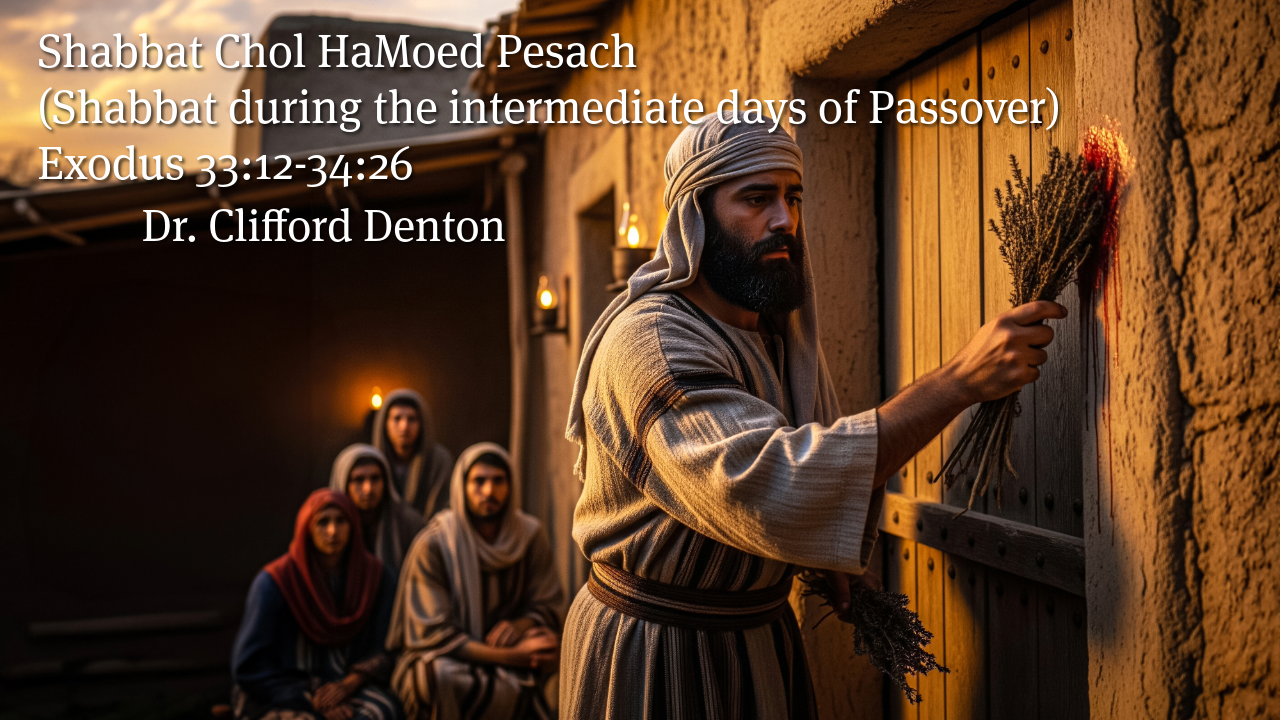
Now the Lord spoke to Moses and Aaron in the land of Egypt, saying, “This month shall be your beginning of months; it shall be the first month of the year to you. Speak to all the congregation of Israel, saying: ‘On the tenth of this month every man shall take for himself a lamb, according to the house of his father, a lamb for a household. And if the household is too small for the lamb, let him and his neighbour next to his house take it according to the number of the persons; according to each man’s need you shall make your count for the lamb. Your lamb shall be without blemish, a male of the first year. You may take it from the sheep or from the goats. Now you shall keep it until the fourteenth day of the same month. Then the whole assembly of the congregation of Israel shall kill it at twilight. And they shall take some of the blood and put it on the two doorposts and on the lintel of the houses where they eat it. Then they shall eat the flesh on that night; roasted in fire, with unleavened bread and with bitter herbs they shall eat it. Do not eat it raw, nor boiled at all with water, but roasted in fire—its head with its legs and its entrails. You shall let none of it remain until morning, and what remains of it until morning you shall burn with fire. And thus you shall eat it: with a belt on your waist, your sandals on your feet, and your staff in your hand. So you shall eat it in haste. It is the Lord’s Passover.(Exodus 12:1-11)
And as they were eating, Jesus took bread, blessed and broke it, and gave it to the disciples and said, “Take, eat; this is My body.”
Then He took the cup, and gave thanks, and gave it to them, saying, “Drink from it, all of you. For this is My blood of the new covenant, which is shed for many for the remission of sins. (Matthew 26:26-28)
For I received from the Lord that which I also delivered to you: that the Lord Jesus on the same night in which He was betrayed took bread; and when He had given thanks, He broke it and said, “Take, eat; this is My body which is broken for you; do this in remembrance of Me.” In the same manner He also took the cup after supper, saying, “This cup is the new covenant in My blood. This do, as often as you drink it, in remembrance of Me.”
For as often as you eat this bread and drink this cup, you proclaim the Lord’s death till He comes. (1 Corinthians 3:23-26)
בָּרוּךְ אַתָּה יְיָ אֱלֹהֵינוּ מֶלֶךְ הָעוֹלָם, שֶׁהֶחֱיָנוּ וְקִיְּמָנוּ וְהִגִּיעָנוּ לַזְּמַן הַזֶּה
Baruch atah Adonai, Eloheinu melech haolam, shehecheyanu v’kiy’manu v’higiyanu laz’man hazeh
Blessed are You, Adonai our God, Ruler of the Universe, who has kept us alive, sustained us, and brought us to this season.
Shabbat shalom!
Dr Clifford Denton
Founder and Director
Tishrei Bible School
