
The Heritage of Faithful Discipleship
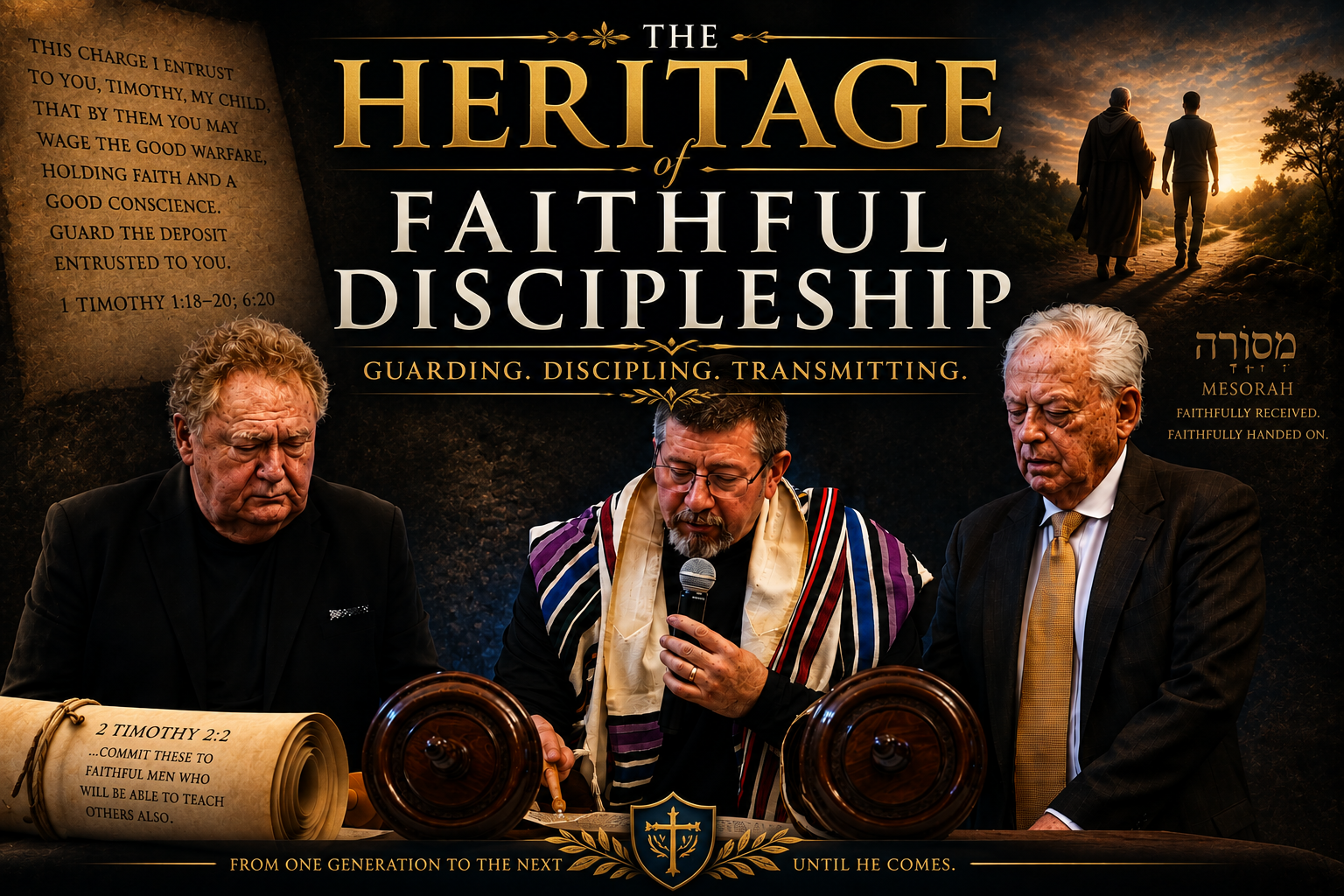
“This charge I entrust to you, Timothy, my child, in accordance with the prophecies previously made about you, that by them you may wage the good warfare, holding faith and a good conscience. By rejecting this, some have made shipwreck of their faith, among whom are Hymenaeus and Alexander, whom I have handed over to Satan that they may learn not to blaspheme”(1 Tim. 1:18–20).
Among the many themes woven throughout Paul’s First Epistle to Timothy, few are as tender and enduring as the relationship between a spiritual father and his son in the faith. Paul does not simply issue instructions to a young minister; he entrusts his beloved disciple with the continuation of the apostolic mission. Timothy’s ministry was not born in isolation, nor was it sustained by personal ambition. It was cultivated through years of faithful discipleship, shared hardship, correction, encouragement, and prayer.
All of us have benefited from faithful teachers, whether in the academy or in the church. I have personally been blessed by many men and women of God who invested their time, wisdom, and energy into my spiritual formation. Often, they saw in me what I was incapable of seeing in myself. Timothy undoubtedly experienced the same grace in the life of Paul. This is one of the most beautiful aspects of biblical discipleship: a faithful mentor recognizes the Lord’s work in another long before that person fully recognizes it himself.
This is one of the Lord’s ways of building His Kingdom. While the Lord certainly calls individuals directly, He most often shapes them through faithful relationships. Before there are leaders, there are disciples. Before there are teachers, there are students. Before there are spiritual fathers and mothers, there are sons and daughters who have learned to follow.
Paul reminds Timothy that he has received a sacred charge. The language is that of stewardship. Ministry is never our possession; it is the Lord’s trust placed temporarily into our hands. Timothy is exhorted to “wage the good warfare,” not through worldly methods, but by holding fast to faith and maintaining a clear conscience before God. Sound doctrine and holy character are inseparable companions. A minister may possess remarkable gifts, but without a formed and guarded conscience those gifts eventually become hollow.
Paul's warning immediately follows. He speaks of Hymenaeus and Alexander, men who had “put away” a good conscience and consequently “made shipwreck concerning the faith” (1 Tim. 1:19–20). Spiritual shipwrecks often begin with small compromises, neglected accountability, uncorrected pride, or the refusal to receive loving admonition. One of the great blessings of biblical mentorship is that it provides watchmen along the journey, those a little ahead of us, who lovingly warn us before the rocks appear beneath the surface.
This concern appears again at the close of the letter: “O Timothy, guard the deposit entrusted to you. Avoid the irreverent babble and contradictions of what is falsely called “knowledge,” (1 Tim. 6:20).
The Greek word parathēkē (παραθήκη) refers to a valuable deposit entrusted to another for safekeeping. Paul pictures the Gospel, apostolic doctrine, and faithful ministry as a priceless treasure placed entrusted to Timothy's care. Timothy is not called to reinvent the faith but to preserve it, embody it, and faithfully transmit it. This principle has profound implications for every generation of believers.
This “deposit” was never intended to remain with one generation. The treasure entrusted to Timothy was the same Gospel Paul had received from the Lord, faithfully proclaimed among the churches, and now committed to another steward. The ministry of the Church is therefore not one of innovation but of faithful transmission. Every generation receives the apostolic faith as a sacred trust and bears the solemn responsibility of handing it on without corruption or compromise. As I have often said, we are called to be imitators not originators.
Jewish readers of Paul would have immediately recognized the importance of faithful transmission. Rabbinic tradition speaks of Mesorah (מְסוֹרָה), the handing down of what has been faithfully received. Pirkei Avot opens with the declaration, “Moses received the Torah at Sinai and handed it on to Joshua ... to the men of the great assembly.” While the apostolic faith is centered upon Messiah Yeshua and is not identical to later rabbinic tradition, the pattern of faithful transmission is remarkably similar. Paul understood himself not as the inventor of a new religion but as a faithful steward of the revelation fulfilled in Messiah, now entrusting that same Gospel to Timothy.
The Pattern of Scripture
The Bible consistently presents discipleship as the Lord’s chosen means of preparing His servants. Moses invested years in Joshua before Israel crossed the Jordan. Joshua observed Moses interceding, judging disputes, receiving revelation, and leading the people through countless trials. When Moses departed, Joshua was prepared because he had first learned to observe and follow.
Elijah cast his mantle upon Elisha long before Elisha inherited the prophetic office. Elisha first became a servant, learning faithfulness in ordinary responsibilities before receiving extraordinary authority.
Naomi patiently instructed Ruth, not only in practical matters but in faithfulness. Ruth’s humble willingness to learn placed her within the very lineage through which Messiah would come.
Proverbs celebrates this relationship: “Hear, my son, your father’s instruction, and forsake not your mother’s teaching” (Prov. 1:8). Throughout Proverbs, wisdom is transmitted personally from one generation to another. Knowledge is never only accumulated; it is lived.
The Rabbi and His Disciple
Within first-century Judaism, discipleship occupied the very heart of spiritual formation. A talmid/ תַּלְמִיד (disciple) did far more than attend lectures. He walked with his rabbi, observed his conduct, memorized his teaching, adopted his habits, and imitated his entire manner of life. Ancient Jewish tradition frequently described the disciple as one who was “covered in the dust of his rabbi,” (Pirkei Avot 1:4) as he followed his teacher closely along the road.
This cultural background illuminates the ministry of Yeshua. His invitation was never simply, “Believe My teachings.” Rather, His call was, “Follow Me.” For nearly three years the disciples watched Him pray, minister to the broken, answer His critics, show compassion to sinners, honor the Father, and endure suffering. Their formation was relational before it was instructional. They learned not merely what the Master taught, but how the Master lived.
Even after His resurrection, the apostles continued this pattern. Paul could confidently write, “Be imitators of me, as I also am of Messiah” (1 Cor. 11:1). Such words would be unthinkable if discipleship were simply an intellectual ascent to knowledge. Paul understood that doctrine must be demonstrated by living before it can be reproduced in the life of the disciple.
Paul’s Investment in Timothy
Few mentoring relationships are more beautiful and profound than that of Paul and Timothy. Timothy first appears in Lystra, already possessing a good reputation among the brethren (Acts 16:1–3). Paul recognized not only Timothy’s gifts but his character. He invited the young disciple into the demanding work of missionary ministry.
Over the years that Timothy traveled alongside Paul, he witnessed persecution, assisted in planting congregations, delivered apostolic letters, represented Paul in difficult situations, and eventually pastored the congregation in Ephesus.
Paul's affection is evident throughout his letters: “For I have no one like him, who will be genuinely concerned for your welfare” (Phil. 2:20). Notice that Paul commends Timothy’s heart before his abilities. Faithful mentorship forms character as well as competence. Unfortunately today, this is not always the case, as we often find charisma is often elevated before character has been fully formed. Skills may qualify a person for ministry, but character sustains ministry over a lifetime.
Still, Timothy was not a lone disciple. Titus likewise became Paul’s trusted fellow laborer, demonstrating that Paul’s ministry consistently multiplied leaders rather than merely gathering followers.
Four Generations of Faithfulness
Perhaps nowhere is the biblical philosophy of mentorship more clearly stated than in 2 Timothy 2:2: “and what you have heard from me in the presence of many witnesses entrust to faithful men, who will be able to teach others also.” Within this single verse we see four generations: Paul; Timothy; faithful men; and those they will teach
The Church of Christ advances because faithful believers intentionally invest in those who will continue the work after them. The ministry is never meant to terminate with us. Every pastor should prayerfully ask, “Whom am I preparing?” Every mature believer should ask, “Whom am I encouraging?” Every younger disciple should ask, “From whom am I learning?” These questions reflect Kingdom stewardship rather than personal success.
A Word to Ministers
Those entrusted with leadership must resist the temptation to measure ministry solely by attendance, buildings, media platforms, or public influence. One of the greatest evidences of fruitful ministry is whether faithful disciples are being raised. Our Lord spent far more time preparing twelve disciples than addressing the multitudes. He understood that transformed people become the means through which the Kingdom continues.
But mentorship requires time and patience. It means allowing younger ministers to ask difficult questions, and giving them the grace to learn through their mistakes.. It means offering correction without humiliation. It means celebrating another’s growth rather than fearing it. It means understanding that our greatest legacy may not be something we build but someone we help prepare.
John the Baptist modeled this beautifully when he declared concerning Yeshua: “He must increase, but I must decrease” (Jn. 3:30). True spiritual fathers rejoice when their children exceed them in fruitfulness.
A Word to the Faithful
The ministry of discipleship belongs to the entire Body of Messiah, not only to “clergy.” Every believer should cultivate a teachable spirit. The author of Hebrews exhorts us, “Remember your leaders, those who spoke to you the word of God. Consider the outcome of their way of life, and imitate their faith” (Heb. 13:7). Take to heart the witness of leaders and teachers who have endured the hills and valleys of life faithfully, imitate that faithfulness. Likewise Paul urges the faithful to esteem those who labor among them (1 Thess. 5:12-13).
Biblical submission is never the surrender of conscience to human authority. Rather, it is the humble recognition that the Lord graciously uses faithful shepherds, teachers, and elders to mature His people for the work of ministry (Eph. 4:12). Healthy discipleship always leads us closer to Messiah, never away from Him. The goal of every mentor is not to create dependence upon himself but deeper conformity to the image of the Son (Ro. 8:29).
Guarding the Good Deposit
Paul’s final appeal to Timothy resonates with every generation: “Guard what has been entrusted to you” (1 Tim. 6:20). We live in a time where novelty is often prized above faithfulness and personal opinion above apostolic truth. Yet the Church is not commissioned to invent a new Gospel but to faithfully preserve and “contend for the faith that was once for all delivered to the saints” (Jude 3).
This sacred trust includes sound doctrine, holy living, pastoral integrity, sacrificial love, and faithful witness. We guard these treasures not by hiding them but by living them and passing them on.
Every faithful mentor becomes another link in a chain extending from the apostles themselves. Every faithful disciple becomes a future teacher. Every generation receives the Gospel as a gift and bears the responsibility of handing it intact to the next.
Paul’s charge to Timothy has now become the Church’s charge to every generation. Guard the good deposit. Hold faith and a good conscience. Entrust the Gospel to faithful people who will teach others also. In doing so, we become faithful stewards of the same sacred trust that began with the apostles and will continue until the appearing of our great God and Savior, Messiah Jesus (Titus 2:13).
In the service of Messiah and His Church,
Bp. Justin D. Elwell
Restoration Fellowship International
