
Pastoral Hope in Seasons of Heaviness
“In this you rejoice, though now for a little while, if necessary, you have been grieved by various trials, so that the tested genuineness of your faith, more precious than gold that perishes though it is tested by fire, may be found to result in praise and glory and honor at the revelation of Jesus Christ” (1 Pet. 1:6-7). Amen.
I’m sure you have noticed, there is a holy weight that comes with pastoral leadership: the weight of souls, the importance of prayer, the need for vigilance in discernment, and the wear of faithfulness in vocation over decades. Yet, in this present hour, it seems things have intensified. Faithful pastors and leaders, regardless of affiliation, are carrying pressures unique to this age, but not so different from those facing earlier generations. The challenges are not just organizational, they are spiritual, cultural, intellectual, emotional, and pastoral.
Many pastors face the same discouragement, whether vocalized or not, concerning the strains of leadership. Remaining faithful, investing their life into the lives of others, often at the expense of their own family, with results that seem, from our perspective, rather bleak. People come and go from congregation in the normal cycle of life, staying for a time, and then suddenly they disappear. An simple assessment of the Body of Christ today finds many of us are more informed regarding congregational practice by glossy ministry reels than the Word of God, creating an unrealistic expectation for congregational assembly, a grass is always greener mentality.
We are facing a convergence of realities that demand both godly courage and faithfulness: weakened structures of accountability, aging pastoral leadership, shortages of aspiring ministers who are being or have been mentored and formed for ministry, declining volunteerism, cultural polarization, and growing tension between biblical faithfulness and cultural acceptance. These are not isolated issues; they are interconnected symptoms of a deeper spiritual condition in the age we are living.
Pressure
Pastoral ministry today, as it has been, is often lonely. Many pastors carry enormous responsibility with diminishing relational and institutional support. As several key leadership studies have found, many pastors polled revealed that they had few friends or confidants. In previous generations, leadership was reinforced by strong institutional systems or networks, robust communal structures, and deeply-rooted cultural respect for pastoral ministry. Much of that scaffolding has eroded, or become increasingly inaccessible. The result is leaders who are overextended, under-supported, and often isolated in their calling.
Accountability structures, where they exist, are sometimes either overly institutionalized, to the point where pastors are fearful of revealing struggles, or they are dangerously absent. True biblical accountability is neither authoritarian control nor autonomous independence. It is relationship established in Messiah: rooted in trust, truth, humility, and shared submission to Christ (Eph. 5:21; Prov. 27:17). Without this, leaders either burnout in isolation or step into vulnerability without godly protection.
Shepherds and Shortages
We cannot deny it, in many areas we are witnessing the aging of pastors who have labored faithfully for decades in obscurity, outside the view of modern media driven ministry, persevering, and giving sacrificial service. Many of these shepherds carry deep and well tested spiritual authority, but fewer successors are stepping forward to carry the mantle, especially in those less visible areas. The pastoral shortage is real, not because God is no longer calling, but because fewer answer (Matt. 9:38).
The costs of ministry has become more visible in the media age. The sacrifices are more apparent. The cultural hostility is more open. The expectations are higher, and often impossible to reach. Additionally, compensation is often lower now than in previous generations when considered in light of inflation and higher cost of education. Many gifted men and women who sense the call of God, hesitate when considering the price of obedience to the pastoral vocation. This is where discernment with, formation by, and the wisdom of senior ministry leaders become invaluable. Ministry, as most of you know, is not for the faint of heart.
Coupled with this, volunteer shortages and the resulting overextension of volunteers, are stretching the resources of local congregations. Churches once sustained by multi-generational service now struggle to staff basic ministries. This is not simply a logistical problem; it is evidence of the often-strained and hectic lives of our members, and overall involvement. Still, when faith becomes consumeristic rather than relational, the church becomes an audience rather than a body formed through discipleship and time (1 Cor. 12:12–27).
Theological Faithfulness in Times of Cultural Tensions
We are also navigating intense cultural tensions. The moral, ethical, and theological pressures placed upon pastors today are unprecedented in speed and scope. News cycles that once followed the publication of evening and morning newspapers, are now measured in moments. Faithful teachers are constantly being pressured to reinterpret Scripture through the everchanging cultural lenses of the moment, rather than interpret culture through Scripture.
This creates a pronounced strain: the desire to remain compassionate without compromising truth, to remain welcoming without weakening doctrine, to remain pastoral without becoming permissive. Nevertheless, Scripture is clear: we are called to speak the truth in love (Eph. 4:15), not replace truth with sentiment, nor love with or in silence. The church does not exist to mirror culture or give approval of it; rather, it exists to transform it by the gospel of Messiah Yeshua/Jesus.
What do we do?
Grace Still Provides
Still, in the midst of all this, and in spite of it, we must not lose our theological center: God has not changed. His Word has not weakened. His Spirit has not diminished. His grace has not run dry. His provision has not failed. As Isaiah writes, “The grass withers, the flower fades, but the word of our God will stand forever” (Isa. 40:8).
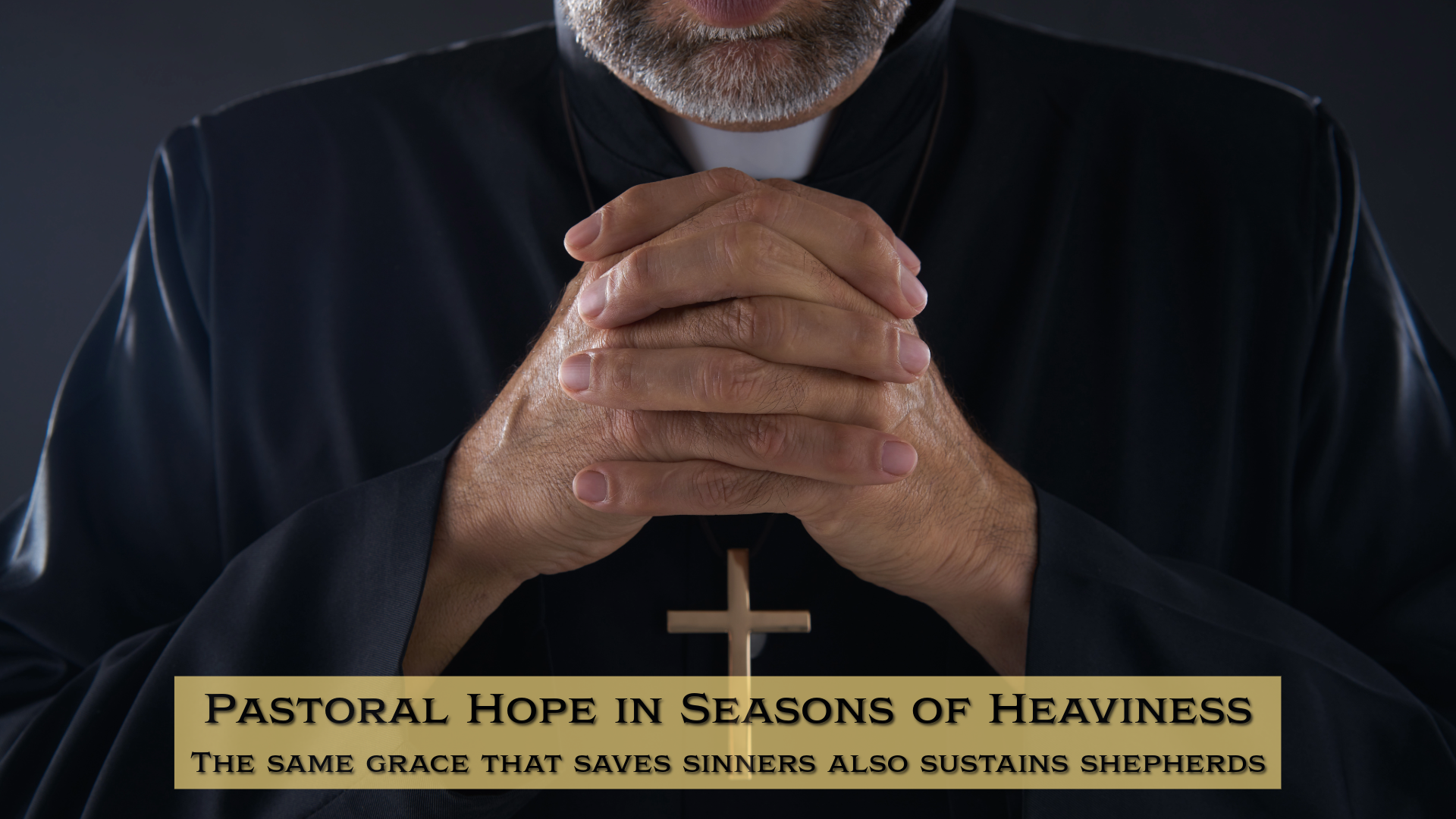
The same Lord who sustained Elijah, strengthened Jeremiah, upheld Paul, and restored Peter is sustaining His faithful servants today. The same grace that saves sinners also sustains shepherds. The same Holy Spirit who builds the church still empowers its leaders. We must remember: the church is not held together by market or media strategy, staffing, or systems, it is held together by Christ Himself (Col. 1:17).
A Pastoral Word to Pastors
To every pastor, bishop, elder, and ministry leader reading this, as I have encouraged before: You are not forgotten. You are not unseen. You are not abandoned. You are not expendable. You are not alone. Your labor in the Lord is not in vain (1 Cor. 15:58). Your tears are counted (Ps. 56:8). Your prayers are heard (Rev. 8:3–4). Your faithfulness is recorded (Heb. 6:10). The Lord does not measure your ministry by attendance charts, budgets, or visibility, He measures it by obedience, faithfulness, and love for His truth.
The Way Forward
The answer to this moment is not fear, retreat, or compromise. As always, the answer is renewal according to the Word:
Renewal of biblical accountability among faithful brethren.
Renewal of discipleship culture in our congregations.
Renewal of calling, formation and education for aspirants to ministry.
Renewal of spiritual fathering and mentoring, not as hierarchy, but as biblical example.
Renewal of prayer and dependence on the Holy Spirit in the midst of all our challenges.
Renewal of confidence in the authority of Scripture, even while society rebels against it and desires to change it to suit its sensibilities, the Word of it has not and will not change.
We must rebuild leadership preparation among His people, not relying on apparent charisma, but through tried and matured character. We must restore ministry formation, not through performance, but through discipleship both in the classroom and the trenches. We must strengthen churches, not through slick marketing campaigns, but through biblical, spiritual and relational depth lived by witness in His people.
A Word of Grace
Finally, let us remember: the Lord never calls without providing grace. He never assigns a burden without supplying strength. He never sends without sustaining. And He never commissions without empowering: “Now to him who is able to do far more abundantly than all that we ask or think, according to the power at work within us” (Eph. 3:20).
Dear colleague, Christ still saves. The Word still transforms. The Spirit still empowers. The church still belongs to Christ; and the gates of hell still shall not prevail against it (Matt. 16:18). Take these reminders to heart as encouragement.
May the Lord continue to strengthen His shepherds, renew His servants, and revive His church in this generation to be missionally minded, and relationally strong.
In the service of Christ and His Church,
Bishop Justin D. Elwell
Restoration Fellowship International
