
In the Lord’s Waiting Room
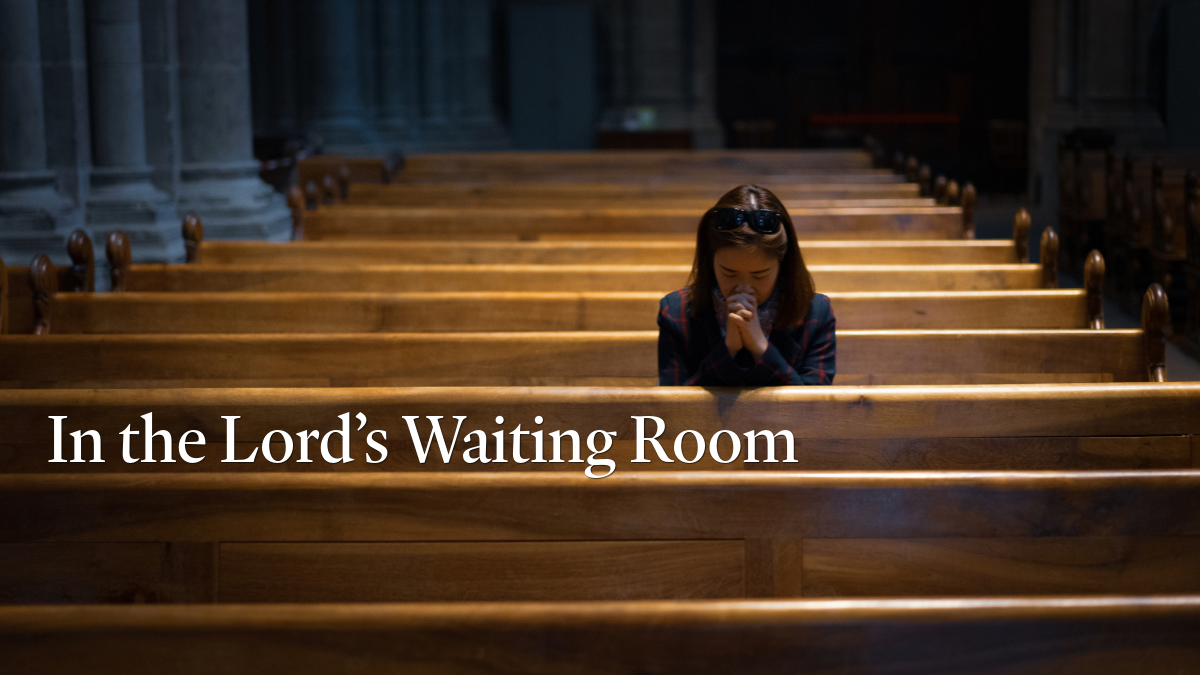
This week I was reminded of the story of Joseph. After the release of the chief cupbearer in Genesis 40:21, Joseph having pleaded with him to remember him upon his restoration (40:14), must wait for two years (41:1) for the cupbearer to remember. Until then, he waited.
Waiting is one of the most challenging disciplines of the spiritual life. We live in a world that prizes immediacy: instant answers, instant gratification, instant results. Yet, Scripture repeatedly calls us to wait; waiting upon the Lord. Waiting in faith is not a type of resignation; it is active trust, faithful living, and hopeful endurance. It is the posture of those who know that God’s timing is perfect, even when ours feels urgent.
Psalm 27:14 exhorts us: “Wait for the Lord; be strong, and let your heart take courage; wait for the Lord!” Rather than a suggestion, it’s a command. To wait is to acknowledge that our lives are not governed by our own schedules, but by His plan. This trust requires courage, because waiting often feels like some kind of weakness. Still, in the waiting room of the Lord, we find that strength is cultivated.
Lamentations 3:25 reminds us: “The Lord is good to those who wait for Him, to the soul who seeks Him.” Waiting is not wasted time; it is sacred time. It is the soil in which faith grows, the place where our hearts learn to seek Him more deeply.
Waiting, however, does not mean inactivity. In Psalm 62:5 we read: “For God alone, O my soul, wait in silence, for my hope is from Him.” This is a call to active faith. Silence before God is not empty, it is filled with expectation. To wait actively is to keep our eyes fixed on Him, to trust His promises, and to resist the temptation to take matters into our own hands.
Abraham waited twenty-five years for the promised son. David waited years between his anointing and his enthronement. Israel waited centuries for the Messiah. Each story reminds us that waiting is not a detour; it is part of the journey. Hebrews, speaking of those waiting says, “These all died in faith, not having received the things promised, but having seen them and greeted them from afar …” (Heb. 11:13). They knew their lives were part of a larger, much more expansive story in God’s redemptive plan.
James 5:7–8 offers a vivid picture: “ Be patient, therefore, brothers, until the coming of the Lord. See how the farmer waits for the precious fruit of the earth, being patient about it, until it receives the early and the late rains. You also, be patient. Establish your hearts, for the coming of the Lord is at hand.”
The farmer does not sit idly by while waiting for the harvest. He tills the soil, plants the seed, and tends the field. Likewise, we are called to live faithfully in His waiting room. Worship does not cease. Service does not pause. Obedience does not wait for convenience. Faithfulness in the small things prepares us for the fulfillment of His larger purposes.
Hope anchors and steadies us in waiting. Without hope, waiting becomes despair. With hope, waiting becomes anticipation. Biblical hope is not optimism or wishful thinking. It is faith that has taken hold of God’s character and His promises revealed in the Word. He has been faithful in the past, He is faithful in the present, and He will be faithful in the future (Heb. 13:8).
When we wait with hope, we are not consumed by anxiety or fear. Instead, we look forward with joy, knowing that God’s promises are “Yes” and “Amen” in Christ. Hope has a name, and hope is a person: Messiah Yeshua/Jesus.
Waiting often tempts us to grumble. Israel grumbled in the wilderness, and their complaints revealed a lack of trust in God’s provision. Grumbling magnifies our frustrations; prayer magnifies God’s faithfulness. We must pray rather than grumble, or we risk murmuring ourselves into the unfaithful condition of a “Murmurite.”
Philippians 4:6–7 reminds us to bring everything to God in prayer, with thanksgiving. In the waiting room, prayer transforms impatience into peace, shifting our focus from what we lack to the One who is sufficient. Amen.
Peace in waiting is not the absence of longing, but the presence of God. When we rest in Him, our hearts are calmed even if our circumstances remain unresolved. Peace comes from knowing that the One we wait upon is trustworthy.
Isaiah 40:31 declares: “They who wait for the Lord shall renew their strength; they shall mount up with wings like eagles; they shall run and not be weary; they shall walk and not faint.” Waiting renews us because it anchors us in God’s strength rather than our own. Then we glide gracefully as an eagle, rather than honking about as an unsteady goose.
The Lord’s waiting room is not a place of frustration, but of formation. It is where faith deepens, faithfulness is refined, hope is strengthened, prayer is cultivated, and peace is experienced. To wait upon the Lord is to embrace His timing, His wisdom, and His goodness. Dear faithful, His ways are not our ways (Isa. 55:8-9).
So, as you find yourself in seasons of waiting, remember, actively trust Him, live faithfully, remain hopeful, pray instead of grumbling, and be at peace in Him. For in the waiting room of the Lord, He is not delaying, He is preparing...YOU. And when His appointed time comes, the fulfillment will be sweeter than anything we could have rushed into ourselves.
Maranatha. Shalom.
Bp. Justin D. Elwell
